
How to Sell Used IT Equipment Without Putting Data at Risk
Businesses can sell used IT equipment through an IT asset disposition provider, equipment broker, marketplace, or trade-in program. Before selling, confirm that equipment is approved for retirement, establish how stored data will be sanitized, and compare offers based on the amount you will receive after fees.
An office upgrade or hardware refresh can leave your business with laptops, servers, and networking equipment it no longer needs. Some devices may still have resale value. Others may cost more to process than they are worth.
The goal is to recover available value while protecting company information and keeping clear records of where your equipment goes.
Where Can Businesses Sell Used IT Equipment?
The right option depends on your equipment, available staff, and security requirements.
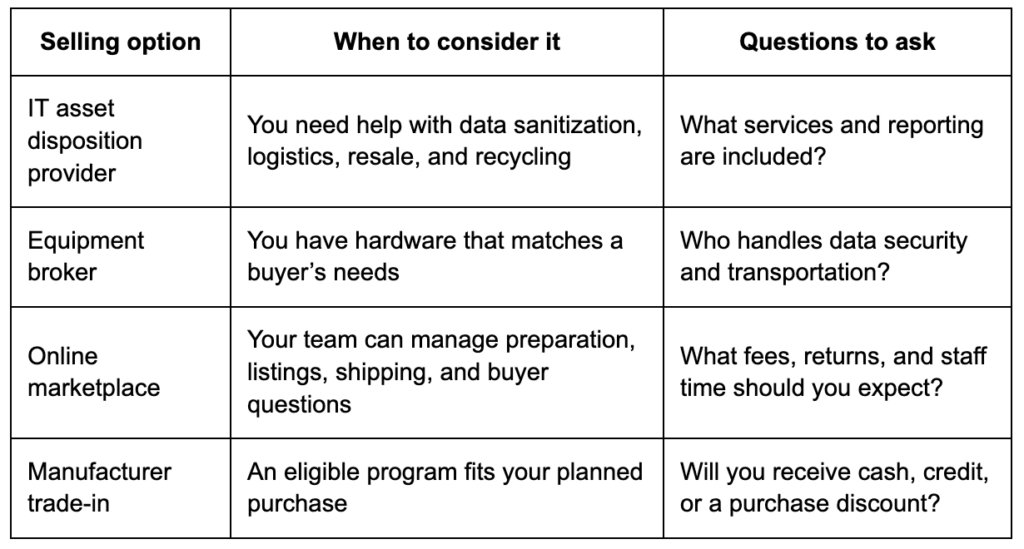
An IT asset disposition provider can bring several retirement tasks into one process. Compare the actual scope of each proposal, since providers may offer different services.
What Used IT Equipment Has Resale Value?
Business laptops, desktops, servers, storage systems, and networking equipment may qualify for resale. However, working equipment is not automatically valuable.
A buyer’s assessment may consider:
- Manufacturer, model, and age
- Processor, memory, and storage specifications
- Working condition and physical damage
- Missing parts, accessories, or components
- Current buyer demand
- Testing, handling, and transportation costs
Ask whether an initial quote is firm or subject to inspection. Also confirm how missing components or failed tests could change the final payment.
Planning resale during a hardware refresh gives your team time to gather records and compare options. Our guide to when to retire IT equipment explains how retirement fits into the broader hardware lifecycle.
How Do You Protect Company Data Before Resale?
Before transferring equipment, establish a documented data sanitization plan with your IT security team and provider.
Do not assume that deleting files or performing a routine reset satisfies your organization’s requirements. The appropriate process depends on the storage media, information sensitivity, intended destination, and company policies.
NIST’s Guidelines for Media Sanitization provides a framework for developing a sanitization program based on the sensitivity of stored information.
Before releasing equipment, ask:
- Which devices and components may contain data?
- What sanitization methods will be used?
- How will results be verified and documented?
- How will equipment be secured before processing?
- What happens if a device cannot be successfully sanitized?
Some media may require physical destruction. That can affect resale options, so establish security requirements before accepting an offer. Data protection should guide the sale.
What Information Do You Need for an Equipment Valuation?
Prepare an inventory before requesting quotes. The more clearly you describe the equipment, the easier it is for providers to evaluate the project.
Include:
- Equipment quantities, manufacturers, and model numbers
- Serial numbers and internal asset tags
- Processor, memory, and storage details
- Known faults, damage, or missing parts
- Equipment locations
- Pickup deadlines and access restrictions
- Data sanitization and reporting requirements
Ask providers to base their proposals on the same inventory and scope. A pickup-only offer cannot be compared fairly with one that includes testing, sanitization, transportation, and reporting.
How Should You Compare Buyback and Remarketing Offers?
Compare your expected return after costs, along with the security controls and services included. The highest advertised equipment value may not produce the largest final payment.
Ask each provider to explain the proposed arrangement. An outright buyback may involve an agreed purchase price, while remarketing may involve selling equipment on your behalf under agreed terms.
Review these details before signing:
Fees: Are testing, sanitization, packing, freight, and recycling included or charged separately?
Payment: When will you be paid, and what conditions must be met first?
Price adjustments: Can the offer change after inspection? How will changes be explained and approved?
Unsold equipment: What happens if equipment does not sell within the agreed period?
Reporting: Will you receive asset-level records showing resale, recycling, and data processing outcomes?
Get these terms in writing so your team understands both the potential return and its responsibilities.
What Happens to Equipment That Cannot Be Resold?
A retirement project may include equipment with different destinations. Some assets may qualify for resale, while others need recycling or further evaluation.
Ask how your provider will identify those assets, obtain any required approvals, and explain associated charges.
For projects involving servers, our server recycling guide covers preparation, data protection, and final documentation.
Recover Value With a Clear Retirement Plan
Selling used IT equipment starts with knowing what you have, protecting its data, and understanding the offer. A clear process helps your business evaluate the financial return without losing track of security or accountability.
ARCOA helps organizations manage retired technology through data sanitization, asset tracking, testing, remarketing, and recycling. Planning a hardware refresh or clearing out retired equipment? Talk with ARCOA about an assessment and the appropriate next steps for your assets.
RELATED INSIGHTS

Your CISO Asked About ITAD: A 5-Minute Briefing for IT Asset Owners
Your CISO pulled you aside and asked about ITAD compliance. Maybe it was during a risk review. Maybe it...

When It’s Time to Decommission, ITAD and Data Centers Belong Together
Data center decommissioning used to be treated as a facilities project. Unplug the equipment, palletize the racks, and call...
LET’S GET STARTED
Ready to put your retired IT assets to work for your business? Contact us to get the conversation started or request a quote. ARCOA has all the solutions you need to turn old IT assets into new revenue.
Talk to an Expert